Deductions Management: Improve Cash Flow, Reduce Revenue Leakage
Deduction management is the process of identifying, validating, and resolving customer deductions to reduce revenue leakage and improve cash flow.
Deductions Management is a structured financial process that helps organizations identify the cause of customer deductions, validate their legitimacy, recover invalid claims, and accelerate dispute resolution. Effective deductions management improves cash flow, reduces revenue leakage, strengthens customer relationships, and provides greater visibility into accounts receivable performance.
 |
| Deductions Management |
Quick Answer
Deductions management enables businesses to track, investigate, and resolve customer deductions efficiently. It combines workflow automation, data analysis, and collaboration between finance, sales, and customer service teams to minimize unresolved disputes and improve working capital.
Key Takeaways
- Deductions are one of the leading causes of delayed cash collection.
- Structured deductions management reduces revenue leakage and write-offs.
- Automation accelerates claim validation and dispute resolution.
- Analytics help identify recurring deduction patterns and root causes.
- Integrated workflows improve collaboration across departments.
- Organizations can significantly improve cash flow and customer satisfaction.
What It Is Deductions Management
Deductions management refers to the end-to-end process of managing customer payment deductions, short payments, pricing disputes, promotional claims, shipping discrepancies, and compliance-related claims. The objective is to validate deductions quickly, recover invalid claims, and resolve legitimate deductions accurately.
The process combines data collection, investigation, workflow management, dispute resolution, and reporting to ensure financial accuracy and operational efficiency.
Why It Matters Deductions Management
Customer deductions can represent a substantial portion of accounts receivable balances. When unresolved, deductions create cash flow disruptions, increase operational costs, and lead to significant revenue leakage.
Effective deductions management allows organizations to identify recurring issues, reduce manual work, and improve financial forecasting. It also enhances customer relationships by resolving disputes faster and with greater transparency.
How It Works Deductions Management
Deductions management begins when a customer submits a short payment or deduction claim. The deduction is classified, investigated, validated, and either approved or disputed. Supporting documentation is collected, and the resolution is recorded for reporting and analytics purposes.
Purpose of Deductions Management
The primary purpose of deductions management is to protect revenue while maintaining healthy customer relationships. It enables organizations to resolve disputes efficiently, improve collection performance, and prevent future deduction occurrences through process improvements.
Key Components
-
Deduction Capture: Collecting deduction data from remittance documents, invoices, and payment records.
-
Classification: Categorizing deductions based on type, reason code, or customer segment.
-
Workflow Management: Routing deductions to the appropriate stakeholders for investigation.
-
Documentation Management: Storing evidence and supporting documents required for resolution.
-
Analytics and Reporting: Measuring trends, root causes, and recovery performance.
-
Resolution Tracking: Monitoring deduction status and closure timelines.
Impact on Business
Organizations with mature deductions management practices often experience faster cash conversion cycles, improved profitability, and better operational efficiency. Visibility into deduction trends also enables businesses to reduce future disputes and strengthen financial controls.
Step-by-Step Workflow Deductions Management
-
Capture the Deduction: Receive deduction information from payment remittances or customer claims.
-
Validate Data: Verify invoice numbers, payment amounts, and claim details.
-
Categorize the Deduction: Assign reason codes and determine ownership.
-
Investigate the Claim: Review documentation and identify the root cause.
-
Resolve the Dispute: Approve, reject, or negotiate the deduction.
-
Recover Revenue: Initiate collections for invalid deductions.
-
Analyze Trends: Identify recurring issues and implement corrective actions.
Key Metrics & KPIs
- Deduction resolution cycle time
- Open deductions value
- Recovery rate percentage
- Invalid deduction percentage
- Average dispute resolution cost
- Days deductions outstanding
- Write-off percentage
- Root cause recurrence rate
Deductions Management Software
Deductions Management Software centralizes deduction processing, automates workflows, and provides complete visibility into dispute resolution activities. The software helps finance teams reduce manual work, improve collaboration, and accelerate cash recovery.
Modern solutions integrate with ERP systems, customer portals, and accounts receivable platforms to streamline end-to-end deduction processing.
Deductions Management Solutions
Deductions Management Solutions combine technology, analytics, and process optimization to address deduction-related challenges. These solutions help organizations classify disputes accurately, improve recovery performance, and reduce operational costs.
Advanced solutions also provide predictive insights that identify high-risk deductions and recurring process failures. Visit Here
Deductions Automation
Deductions Automation uses artificial intelligence, machine learning, and workflow technologies to reduce manual intervention in deduction processing. Automated systems can classify deductions, route disputes, and prioritize recovery actions based on business rules.
Automation improves processing speed and enables finance teams to focus on strategic activities instead of repetitive administrative tasks.
Deductions Automation Software
Deductions Automation Software leverages intelligent technologies to streamline dispute resolution and improve financial visibility. The software can automatically extract remittance information, assign reason codes, and generate analytical reports for decision-making.
Organizations using automation software often achieve lower operating costs, reduced deduction backlogs, and improved cash flow management.
Comparison Table
The following table compares manual deduction processes with automated deductions management capabilities.
| Area | Manual Process | Automated Process |
|---|---|---|
| Data Entry | Time-consuming | Automated extraction |
| Classification | Human dependent | Rule-based and AI |
| Resolution Time | Long cycle times | Accelerated workflows |
| Reporting | Limited visibility | Real-time dashboards |
| Recovery Rate | Lower | Higher recovery potential |
| Scalability | Restricted | Highly scalable |
Key Benefits
-
Improved Cash Flow: Faster dispute resolution accelerates collections.
-
Reduced Revenue Leakage: Invalid deductions are identified and recovered.
-
Operational Efficiency: Automation reduces manual processing efforts.
-
Better Customer Experience: Transparent dispute management improves relationships.
-
Enhanced Visibility: Analytics provide actionable business insights.
-
Stronger Compliance: Standardized processes improve financial controls.
Common Challenges
-
Data Fragmentation: Information exists across multiple systems and departments.
-
High Deduction Volumes: Large transaction volumes increase complexity.
-
Manual Processes: Spreadsheet-based workflows delay resolution.
-
Poor Documentation: Missing information slows investigations.
-
Limited Visibility: Organizations struggle to identify root causes.
-
Resource Constraints: Teams often lack dedicated deduction specialists.
Use Cases
-
Retail Promotions: Validating promotional claims and trade spending deductions.
-
Pricing Disputes: Investigating invoice discrepancies and contract terms.
-
Freight Claims: Managing transportation and shipping deductions.
-
Compliance Penalties: Resolving customer chargebacks and fines.
-
Returns Management: Handling product return deductions efficiently.
Detailed Example
-
A customer deducts $5,000 due to a pricing discrepancy.
-
The deduction is automatically captured from the remittance advice.
-
The claim is classified as a pricing deduction.
-
The finance team reviews contract terms and invoice details.
-
The deduction is determined to be invalid.
-
A recovery claim is initiated and sent to the customer.
-
The payment is collected and the case is closed.
-
Analytics reveal recurring pricing issues that require process improvements.
Common Mistakes to Avoid
- Ignoring root cause analysis.
- Using disconnected spreadsheets.
- Failing to prioritize high-value deductions.
- Delaying dispute investigations.
- Maintaining inconsistent reason codes.
- Operating without performance metrics.
Best Practices
- Implement standardized workflows.
- Adopt automation technologies.
- Maintain centralized documentation.
- Monitor deduction trends continuously.
- Establish clear ownership responsibilities.
- Measure performance using actionable KPIs.
Key Features Trends In Deductions Management
◦ Artificial intelligence for automatic deduction classification and prioritization.
◦ Predictive analytics to identify recurring deduction risks.
◦ Real-time dashboards for executive visibility.
◦ Automated workflow routing and case management.
◦ Integration with ERP and accounts receivable systems.
◦ Machine learning models for dispute prediction and recovery optimization.
◦ Self-service portals for customers and internal teams.
How Emagia Helps Deductions Management
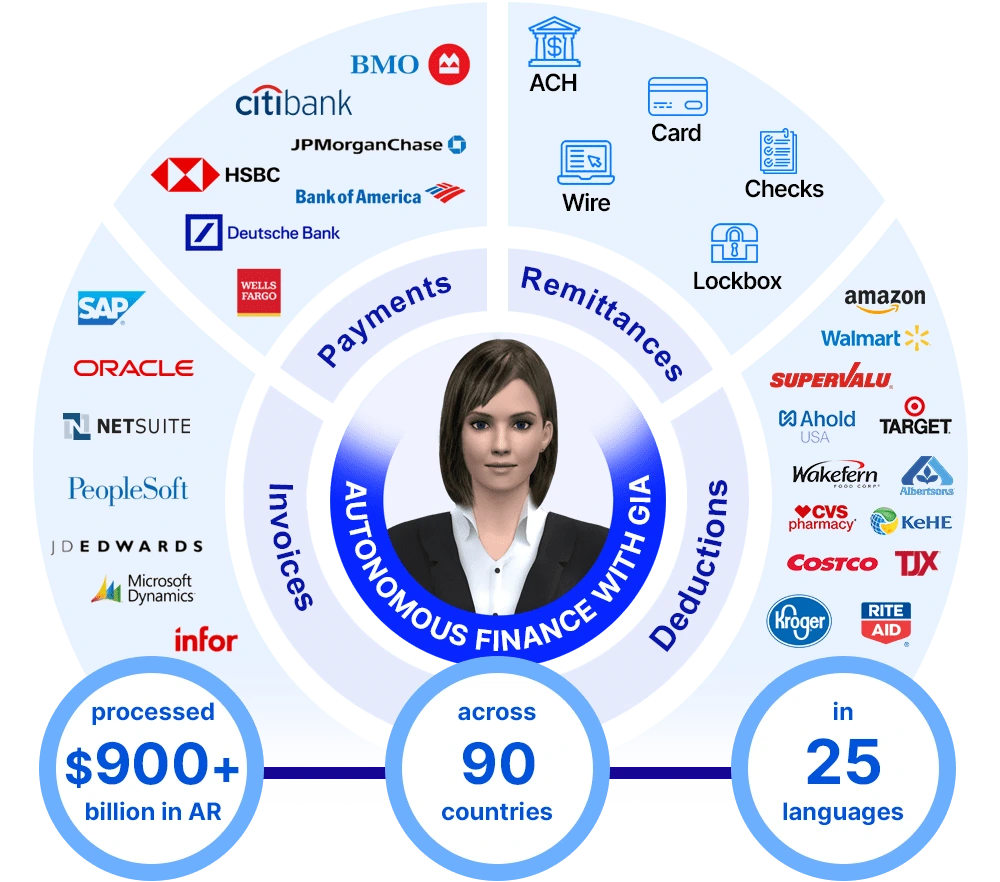
Emagia helps organizations modernize deductions management by combining automation, analytics, and workflow orchestration. The platform enables finance teams to capture deduction information automatically, prioritize investigations, and monitor resolution performance through real-time dashboards.
By integrating accounts receivable processes with advanced analytics, organizations can identify root causes, improve cash recovery rates, and gain better visibility into deduction trends. automation also reduces manual effort and supports more efficient collaboration across finance, sales, and customer service teams.
Frequently Asked Questions
What is deductions management?
Deductions management is the process of identifying, validating, investigating, and resolving customer deductions or short payments. The objective is to recover invalid deductions, resolve legitimate claims efficiently, and improve cash flow while maintaining strong customer relationships.
How does deductions management improve cash flow?
Effective deductions management accelerates dispute resolution and reduces outstanding receivables. By recovering invalid deductions and minimizing write-offs, organizations can increase cash collections and improve working capital performance.
What is Deductions Management Software?
Deductions Management Software is a technology platform that automates deduction capture, classification, investigation, and reporting. It centralizes workflows and provides greater visibility into dispute resolution activities and recovery opportunities.
How does Deductions Automation work?
Deductions Automation uses artificial intelligence, workflow rules, and data extraction technologies to automate repetitive tasks. Automated systems can classify deductions, route cases, and generate insights that help teams resolve disputes faster.
Which deductions management model is best?
The most effective model combines automation, centralized workflows, analytics, and cross-functional collaboration. Organizations often achieve the best results when they integrate deductions management with broader accounts receivable and cash application processes.
Can artificial intelligence improve deductions management?
Yes. Artificial intelligence can automate classification, predict dispute outcomes, prioritize high-value cases, and identify recurring deduction patterns. These capabilities reduce operational costs and improve decision-making.
Why do customer deductions occur?
Customer deductions occur because of pricing discrepancies, promotional claims, shipping issues, compliance penalties, returns, and invoice errors. Understanding root causes helps organizations reduce future deductions and improve process efficiency.
What metrics should organizations track in deductions management?
Organizations should monitor deduction resolution time, recovery rates, open deduction balances, write-offs, and root cause trends. These metrics provide valuable insights into operational performance and financial effectiveness.


Comments
Post a Comment