Cash Application Process Explained: Automation, Software & Benefits
Cash application process is the financial workflow of matching incoming customer payments with open invoices in an organization’s accounting system. It ensures accurate cash posting, reduces reconciliation errors, and improves liquidity visibility. By automating or optimizing this process, businesses accelerate order-to-cash cycles, reduce manual workload, and strengthen financial reporting accuracy.
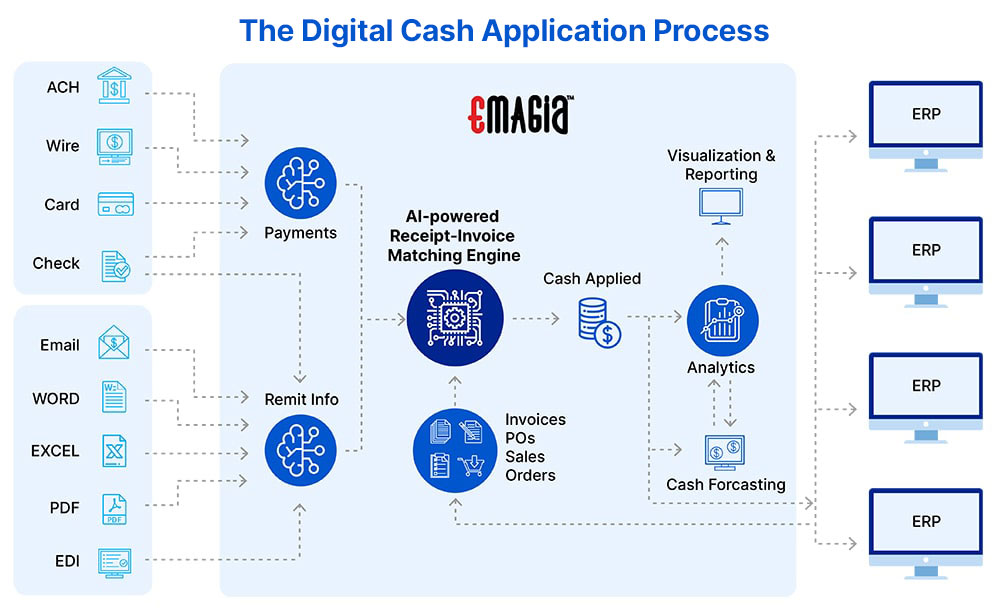
Cash application is the process of pairing incoming payments with outstanding invoices to efficiently manage cash flow and ensure accurate financial records. Most problems in the cash application process involve inaccurate payment details, which are more common when using a manual, paper-based process.
Quick Answer
The cash application process is the accounting function that matches incoming payments to open invoices in the ERP system. It ensures that customer payments are correctly posted, outstanding balances are updated in real time, and financial records remain accurate. Efficient cash application improves cash visibility, reduces Days Sales Outstanding (DSO), and supports stronger working capital management.
Key Takeaways
- Cash application ensures accurate matching of payments to invoices in accounting systems.
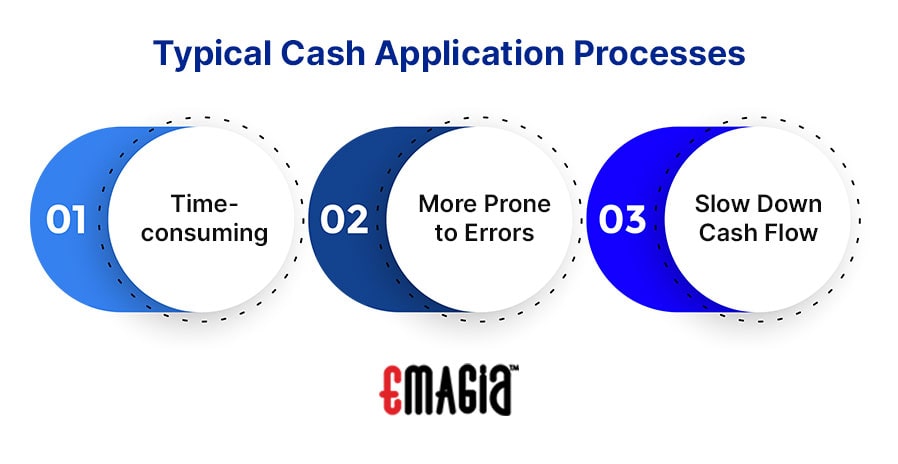
- Manual processing leads to errors, delays, and increased reconciliation effort.
- Automation improves speed, accuracy, and cash visibility across finance operations.
- It is a core component of the order-to-cash lifecycle.
- Advanced solutions leverage AI, ERP integration, and remittance data processing.
What It Is Cash Application Process
The cash application process is a critical financial operation within accounts receivable that ensures incoming payments from customers are correctly identified, allocated, and recorded against open invoices. It acts as the bridge between payment receipt and ledger accuracy.
In modern finance operations, cash application is not just data entry. It is a structured reconciliation mechanism that integrates banking data, remittance advice, ERP records, and customer invoice details to maintain financial integrity.
Why It Matters Cash Application Process
Cash application directly impacts liquidity, reporting accuracy, and customer account clarity. Without accurate posting, organizations face delayed reconciliation, inflated receivables, and reduced financial visibility. It also affects customer satisfaction when accounts show incorrect outstanding balances.
How It Works Cash Application Process
The process typically begins when a payment is received via bank transfer, check, or digital payment channel. The finance team collects remittance information, identifies the corresponding invoices, and posts the payment in the ERP system.
Advanced systems automate this by extracting remittance data, matching it using rules or AI models, and posting transactions in real time.
Purpose of Cash Application Process
The purpose of cash application is to ensure that every incoming payment is accurately reflected in financial records. It supports clean bookkeeping, reduces disputes, and ensures that outstanding receivables reflect true customer balances.
Key Components
- Payment Data Capture: Collecting payment details from banks, lockboxes, or digital channels for processing.
- Remittance Information: Matching payment references, invoice numbers, and customer identifiers to ensure accurate allocation.
- ERP Integration: Syncing with accounting systems to update invoice status and ledger balances in real time.
- Reconciliation Engine: Validating matches between payments and invoices using predefined or intelligent rules.
- Exception Handling: Managing unmatched or partial payments requiring manual intervention.
Impact on Business
Efficient cash application improves financial operations by reducing manual reconciliation workload and enhancing reporting accuracy. It strengthens cash forecasting, improves credit control, and reduces friction in customer account management.
Step-by-Step Workflow Cash Application Process
- Payment Receipt: The organization receives customer payments through bank channels or digital platforms.
- Data Extraction: Payment and remittance details are extracted from bank statements or invoices.
- Invoice Matching: Payments are matched to outstanding invoices using reference data or automation tools.
- Validation: The system verifies correct allocation and flags inconsistencies or partial payments.
- Posting: Matched transactions are posted into the ERP system, updating customer balances.
- Reconciliation: Finance teams review exceptions and finalize accounting records.
Key Metrics & KPIs
Organizations measure cash application performance using key financial and operational metrics that reflect efficiency and accuracy.
- Days Sales Outstanding (DSO): Measures how quickly receivables are collected.
- Match Rate: Percentage of payments automatically matched without manual intervention.
- Exception Rate: Volume of unmatched or partially matched payments.
- Processing Time: Time required to complete cash posting cycles.
- Reconciliation Accuracy: Degree of correctness in invoice-payment matching.
Cash Application
Cash Application refers to the financial process of applying incoming customer payments to the correct outstanding invoices within an organization’s accounting system. It is a core accounts receivable function that ensures financial records accurately reflect payment status and customer balances.
In modern finance departments, Cash Application is increasingly driven by automation technologies that reduce manual reconciliation effort and improve processing speed. It plays a critical role in maintaining working capital efficiency and financial transparency.
Cash Application Software
Cash Application Software is a specialized financial technology solution designed to automate the matching of incoming payments with open invoices. It integrates with banking systems and ERP platforms to streamline data extraction, reconciliation, and posting.
These systems often include AI-based matching engines, optical character recognition for remittance data, and workflow tools for exception management. They significantly reduce manual intervention and improve accuracy in high-volume environments.
Cash Application Automation
Cash Application Automation refers to the use of digital technologies, rules engines, and artificial intelligence to eliminate manual intervention in the cash posting process. It enables real-time matching of payments to invoices using structured and unstructured data.
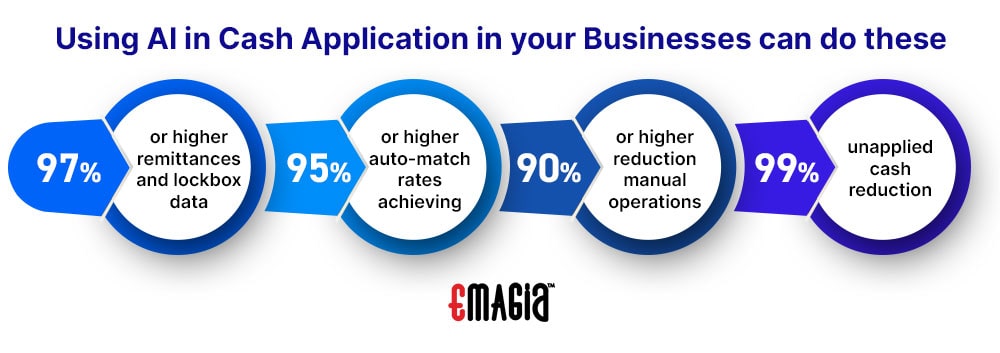
Automation improves efficiency by reducing processing time, minimizing errors, and increasing straight-through processing rates. It is a key enabler of modern finance transformation initiatives.
Order-to-Cash Automation
Order-to-Cash Automation is the end-to-end digitization of the entire revenue cycle, from order placement to final cash receipt and reconciliation. Cash application is a critical component of this process.
By connecting order management, billing, collections, and cash application, organizations achieve faster revenue realization, improved visibility, and reduced operational friction across finance functions.
Intelligent cash application solutions
Intelligent cash application solutions leverage artificial intelligence, machine learning, and predictive analytics to enhance payment matching accuracy and automate exception handling. These systems learn from historical payment behavior to improve future matching performance.
They can process structured and unstructured remittance data, handle multi-invoice payments, and reduce dependency on manual reconciliation teams.
Cash posting automation
Cash posting automation refers to the automated recording of matched payments into the accounting ledger or ERP system. It ensures that once a payment is validated and matched, it is instantly reflected in financial records.
This reduces delays in financial reporting and ensures that customer accounts remain accurate and up to date, improving both internal reporting and customer communication.
Comparison Table
The following table compares manual and automated cash application approaches, highlighting operational differences in speed, accuracy, and scalability.
| Aspect | Manual Cash Application | Automated Cash Application |
|---|---|---|
| Processing Speed | Slow due to manual matching and data entry | Fast with real-time matching and posting |
| Accuracy | Prone to human error and misposting | High accuracy using rule-based or AI matching |
| Scalability | Limited by workforce capacity | Highly scalable across large transaction volumes |
| Cost Efficiency | High operational cost due to manual labor | Lower cost through reduced manual effort |
| Exception Handling | Time-consuming manual investigation | Automated flagging and prioritization |
Key Benefits
- Improved Cash Visibility: Real-time updates enhance liquidity tracking and forecasting accuracy.
- Reduced Manual Workload: Automation eliminates repetitive reconciliation tasks.
- Faster Close Cycles: Accelerates month-end and financial reporting processes.
- Better Customer Experience: Accurate billing reduces disputes and confusion.
Common Challenges
- Incomplete Remittance Data: Missing references make matching difficult and delay posting.
- High Volume Complexity: Large transaction volumes increase reconciliation workload.
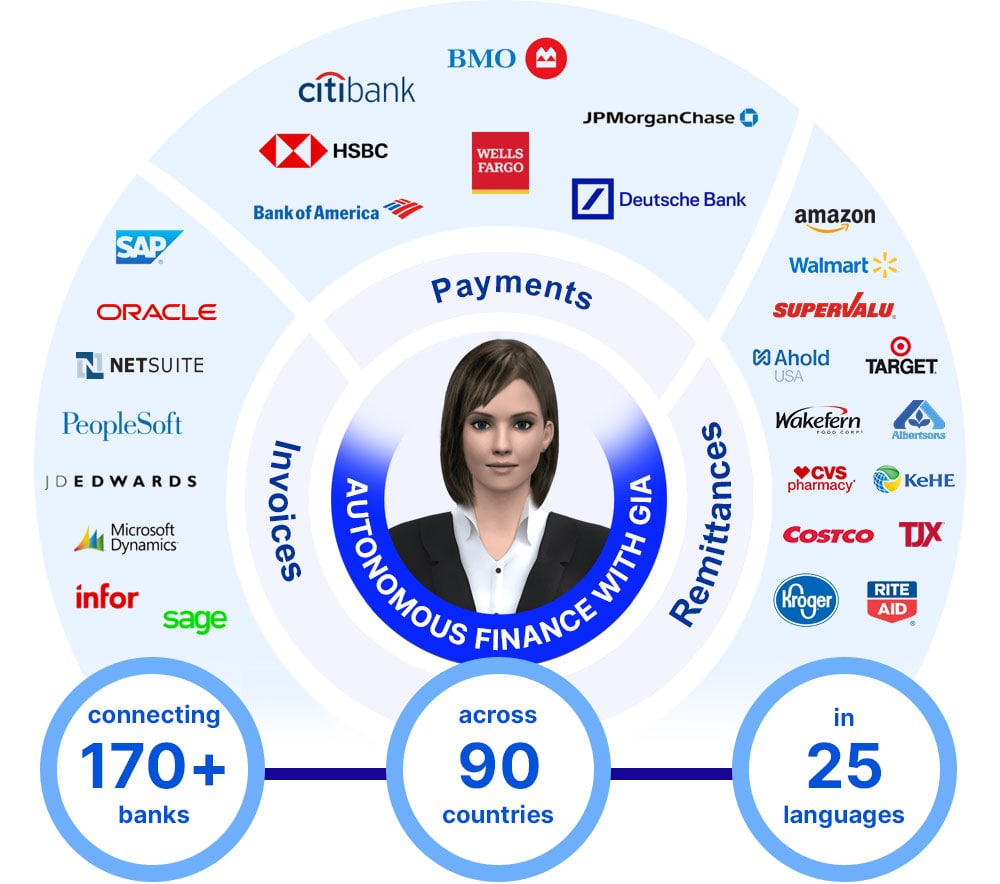
- System Fragmentation: Disconnected ERP and banking systems reduce efficiency.
- Manual Dependency: Overreliance on human processing leads to errors and delays.
Use Cases For Cash Application Process
- Enterprise Accounts Receivable: Managing high-volume invoice payments across global customers.
- Bank Reconciliation: Aligning bank deposits with internal accounting records.
- Subscription Businesses: Matching recurring payments with subscription invoices.
- Shared Services Centers: Centralizing financial operations across multiple business units.
- E-commerce Platforms: Reconciling multi-channel payments with order invoices.
Detailed Example Of Cash Application Process
- Invoice Issued: A customer receives multiple invoices for services rendered in a billing cycle.
- Payment Received: The customer sends a consolidated bank transfer covering all invoices.
- Data Capture: Payment details and remittance notes are extracted from the bank file.
- Matching Process: The system identifies invoice references and allocates funds accordingly.
- Exception Handling: One invoice lacks clear reference and is flagged for review.
- Final Posting: Remaining invoices are posted automatically while the exception is resolved manually.
Common Mistakes to Avoid
- Ignoring remittance standardization, leading to poor matching accuracy.
- Relying heavily on spreadsheets instead of integrated systems.
- Failing to reconcile exceptions promptly, causing backlog accumulation.
- Not updating ERP rules for evolving payment formats.
Best Practices
- Standardize remittance formats across customers and payment channels.
- Integrate banking systems directly with ERP platforms.
- Use rule-based logic combined with AI-driven matching.
- Regularly monitor KPIs such as match rate and exception rate.
- Continuously optimize exception workflows for faster resolution.
Key Features Trends In Cash Application Process
- ◦ AI-powered matching models that improve accuracy through learning patterns in payment behavior.
- ◦ Real-time ERP synchronization for instant posting and ledger updates.
- ◦ Intelligent exception prioritization to accelerate resolution of complex cases.
- ◦ Cloud-based processing for scalability across global finance operations.
- ◦ Embedded analytics dashboards for monitoring cash flow performance.
How Emagia Helps Cash Application Process
Emagia provides intelligent finance automation capabilities that enhance cash application performance through AI-driven matching, analytics, and workflow optimization. It helps organizations reduce manual effort while improving accuracy and processing speed.
By integrating automation with financial intelligence, Emagia supports finance teams in achieving higher straight-through processing rates and better visibility into receivables performance.
FAQs
What is the cash application process in accounting?
The cash application process in accounting refers to matching incoming customer payments with outstanding invoices in the ERP system. It ensures accurate financial records, reduces discrepancies, and keeps accounts receivable updated. This process is essential for maintaining correct cash flow visibility and supporting financial reporting accuracy across business operations.
Why is cash application important for businesses?
Cash application is important because it directly impacts cash flow accuracy, customer account clarity, and financial reporting. Without proper matching of payments and invoices, organizations may face reconciliation delays, incorrect balances, and poor liquidity visibility, which can affect decision-making and operational efficiency.
How does cash application automation work?
Cash application automation works by extracting payment and remittance data, matching it with open invoices using predefined rules or AI models, and posting results into ERP systems. It reduces manual intervention, improves accuracy, and accelerates processing time, especially in high-volume financial environments.
What are the benefits of Cash Application Software?
Cash Application Software improves efficiency by automating invoice matching, reducing manual errors, and accelerating reconciliation cycles. It integrates with banking and ERP systems, enabling real-time posting and better financial visibility while reducing operational costs and improving straight-through processing rates.
What challenges exist in the cash application process?
Common challenges include incomplete remittance information, manual data entry errors, fragmented systems, and high transaction volumes. These issues slow down reconciliation, increase exceptions, and reduce accuracy in financial reporting if not addressed through automation or standardized processes.
Can AI improve cash application accuracy?
Yes, AI significantly improves cash application accuracy by learning payment patterns, processing unstructured data, and improving invoice matching over time. AI-driven systems reduce manual intervention, enhance exception handling, and increase straight-through processing rates in finance operations.
What is the role of cash posting automation?
Cash posting automation ensures that once payments are matched to invoices, they are automatically recorded in the accounting system. This reduces delays, eliminates manual posting errors, and ensures real-time updates to financial records and customer account balances.
How does cash application impact order-to-cash cycles?
Cash application is a critical step in the order-to-cash cycle because it determines how quickly payments are reflected in financial systems. Efficient cash application reduces Days Sales Outstanding (DSO), improves cash flow visibility, and accelerates revenue realization across the business lifecycle.


Comments
Post a Comment